B.O.D Incubator in Bhavnagar: What Microbiology Labs Actually Check Before Buying
B.O.D Incubator in Bhavnagar: What Microbiology Labs Actually Check Before Buying
If you run a microbiology lab in Bhavnagar, you already know the drill. Water samples from the port area, effluent samples from the industrial belt, food samples that need a five-day BOD readout. All of them pass through one machine that never gets a day off: the B.O.D Incubator. It is the most boring and most important box in the lab. Boring, because it just sits there holding temperature. Important, because if the temperature drifts, every result it touches becomes suspect.
Buying one looks simple on paper. In practice, labs in Bhavnagar learn the hard way that two incubators with the same brochure specifications can behave very differently once they are loaded with samples and running through a coastal summer. This guide walks through what experienced lab in-charges actually check before placing an order, so you buy once and buy right.
What a B.O.D Incubator Actually Does (and What It Does Not)
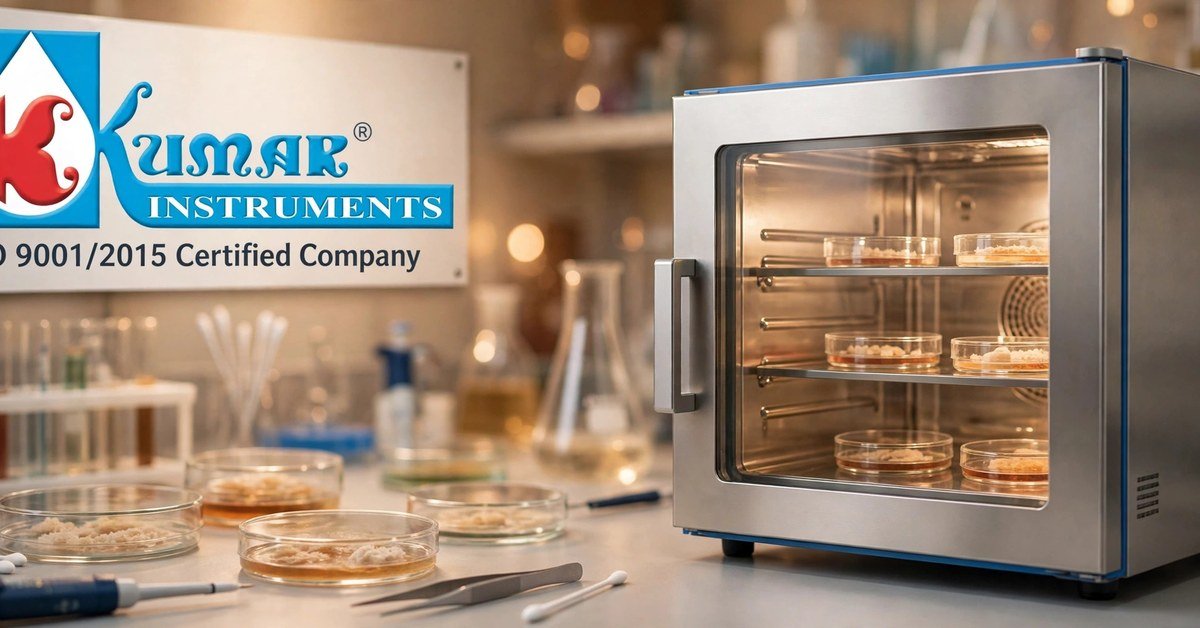
A B.O.D incubator is built for one job: holding a steady low temperature, usually around 20 degrees Celsius, for the biochemical oxygen demand test. The five-day BOD test is the backbone of wastewater and effluent analysis, and the incubation temperature is not a suggestion. It is the condition the whole test result rests on.
What surprises first-time buyers is what the machine does not do. It does not refrigerate like a fridge, it does not heat like an oven, and it is not interchangeable with a general-purpose bacteriological incubator that runs at 37 degrees. A B.O.D incubator works in a narrow band, often below room temperature, which means it needs both gentle cooling and gentle heating to hold steady through day and night cycles. In a city like Bhavnagar, where summer afternoons push well past 40 degrees, that cooling side of the job matters more than most buyers expect.
When you are comparing models, start by confirming the working temperature range covers your test protocols with margin on both sides. Then look at how the machine achieves it. A unit that struggles to pull down to temperature on a hot afternoon will struggle every summer for its entire working life.
Temperature Uniformity: The Specification That Matters Most
Ask any senior microbiologist what ruins BOD results and you will hear the same answer: uneven temperature inside the chamber. The controller display might read a perfect 20 degrees while the top shelf sits two degrees warmer than the bottom. Samples on different shelves then incubate under different conditions, and nobody finds out until an audit or a disputed result.
Good uniformity comes from chamber design, not from the controller alone. Look for forced air circulation that actually moves air through a loaded chamber, not just an empty one. Ask the supplier how uniformity was tested and whether the figure holds with the chamber full. A lab in Bhavnagar running effluent samples for the industrial area around Alang will typically load the incubator heavily, so empty-chamber numbers on a datasheet tell you very little.
Recovery time matters too. Every time the door opens, warm air rushes in. A well-designed unit pulls back to set temperature quickly and evenly. A poor one takes its time, and during that time your samples are incubating at the wrong temperature. If you can, ask for a demonstration with the door opened and closed, and watch the recovery on the display.
Size and Capacity: Matching the Machine to Your Workload
B.O.D incubators come in a range of chamber volumes, and buyers routinely get this wrong in both directions. Too small, and you end up stacking bottles, blocking air circulation, and running the machine twice as often. Too large, and you pay for capacity you never use while the unit cycles inefficiently on a half-empty chamber.
The practical way to size it: count your peak daily BOD bottle load, add the space needed for air gaps between bottles, and then add about twenty percent headroom for growth. Remember that shelves reduce usable height, and tall bottles need clearance. A testing lab in Bhavnagar that handles municipal water samples plus industrial effluent will have very different loading patterns across the week, so size for your busiest day, not your average one.
Also think about where the machine will live. B.O.D incubators need ventilation space around them, especially the cooling side. Measure your lab space before ordering, including door swing and clearance at the back. More than one lab has discovered on delivery day that the unit does not fit through the lab door.
Build Quality: What Separates a Five-Year Machine from a Fifteen-Year One
A B.O.D incubator runs continuously for years. The difference between a machine that lasts five years and one that lasts fifteen is almost entirely in build quality, and most of it is visible if you know where to look.
Start with the chamber. Stainless steel interiors handle the humidity and occasional spills of microbiology work far better than painted mild steel, which eventually chips and rusts in Bhavnagar’s coastal air. Check the door gasket: it should seat firmly all around with no gaps, because a leaking gasket makes the cooling system work overtime and shortens compressor life. Look at the hinges and latches. These get used dozens of times a day, and flimsy hardware is always the first thing to fail.
Then the refrigeration and control system. Ask what compressor is used and whether the controller is a simple thermostat or a proper digital PID controller. A digital controller with a clear display is not a luxury. It is how you verify the machine is actually doing its job, day after day. And ask about the insulation. In a hot climate, thin insulation means the compressor runs constantly, electricity bills climb, and the machine ages faster.
Bhavnagar-Specific Realities: Heat, Humidity, and Power
Laboratory equipment behaves differently in Bhavnagar than it does in a brochure. Three local realities deserve attention before you buy.
First, ambient heat. Summer temperatures regularly cross 40 degrees, and many labs do not run air conditioning around the clock. Your incubator’s cooling system must be rated to pull down to 20 degrees against that ambient load, not against a comfortable 25-degree lab. Ask the supplier directly: what is the maximum ambient temperature this unit is rated for? If the answer is vague, treat that as an answer.
Second, humidity and salt in the air. Bhavnagar’s coastal location means corrosion finds every weak point. Stainless steel interiors, powder-coated exteriors with proper pretreatment, and sealed electrical compartments are not cosmetic choices here. They are survival features.
Third, power fluctuations. Voltage dips are a fact of life in many industrial areas. A good incubator should tolerate reasonable voltage variation without the controller resetting or the compressor stalling. Ask whether the unit has built-in voltage protection or whether you need to budget for a stabilizer. And confirm what happens after a power cut: does the unit resume automatically at the set temperature, or does someone need to restart it manually at 2 in the morning?
Questions to Ask the Supplier Before You Place the Order
By the time you are talking to a supplier, you should have answers to these. If the supplier cannot answer them clearly, that tells you something too.
Ask for the uniformity figure with a loaded chamber, not an empty one. Ask for the maximum rated ambient temperature. Ask what happens during and after a power failure. Ask about the warranty terms in plain language: what is covered, for how long, and who carries out the service. Ask how long spare parts remain available, because an incubator is a ten-plus-year investment and you do not want to discover in year six that the controller is obsolete. Finally, ask for two or three reference installations you can call. A supplier confident in the product will give them without hesitation.
Price matters, but the cheapest incubator is rarely the cheapest over its lifetime. Factor in electricity consumption, expected service costs, and the cost of a single batch of ruined samples. Viewed that way, the price difference between a decent unit and a good one usually pays for itself within the first couple of years.
What temperature does a B.O.D incubator maintain?
B.O.D incubators are designed to hold around 20 degrees Celsius, which is the standard incubation temperature for the five-day biochemical oxygen demand test. Most units offer a working range that extends a few degrees on either side, giving flexibility for related low-temperature incubation work. The critical factor is not the setpoint but how steadily the machine holds it across all shelves.
How is a B.O.D incubator different from a regular laboratory incubator?
A regular bacteriological incubator typically runs at 37 degrees and only heats. A B.O.D incubator must both cool and heat to hold a steady temperature near 20 degrees, often below room temperature. That dual requirement means different refrigeration, insulation, and control systems. Using a standard incubator for BOD work, or vice versa, gives unreliable results.
What size B.O.D incubator does a small testing lab need?
It depends on daily sample load rather than lab size. Count your peak-day BOD bottles, allow air gaps between them, add shelf clearance, and then add roughly twenty percent headroom. For many small municipal and effluent testing labs, a mid-size chamber handles the load comfortably. Oversizing wastes money and electricity, while undersizing forces double runs.
How often should a B.O.D incubator be calibrated?
Most quality-conscious labs verify temperature with a calibrated thermometer quarterly and do a full calibration annually, or whenever the unit is moved or serviced. Keep a simple log of daily temperature readings. It takes a minute a day and it is the first thing an auditor asks for. A drift caught early is a minor adjustment; a drift caught during an audit is a major problem.
Can a B.O.D incubator run continuously?
Yes, these machines are designed for continuous operation over years. That is exactly why build quality matters so much: the compressor, controller, gaskets, and hinges all work non-stop. Choose a unit built for that duty cycle, keep the condenser coils clean, and do not block the ventilation clearances, and the machine will run reliably for a very long time.
Choosing the right B.O.D Incubator comes down to matching the machine to your real workload, your local conditions, and your long-term plans. Get the uniformity, the sizing, and the build quality right, and the incubator becomes the one piece of equipment you never have to think about. For labs in Bhavnagar and across Gujarat, Kumar Instruments manufactures laboratory incubators built for continuous duty in Indian conditions. Reach us at Kumar Instruments, 54/5911 Sadar Thana Rd, Basti Harphool Singh, Sadar Bazar, New Delhi 110006, phone +91 98994 63478, and we will help you size the right unit for your lab.