Autoclave Horizontal in Ludhiana: Sterilizing Bulk Loads Without Bottlenecks
Autoclave Horizontal in Ludhiana: Sterilizing Bulk Loads Without Bottlenecks
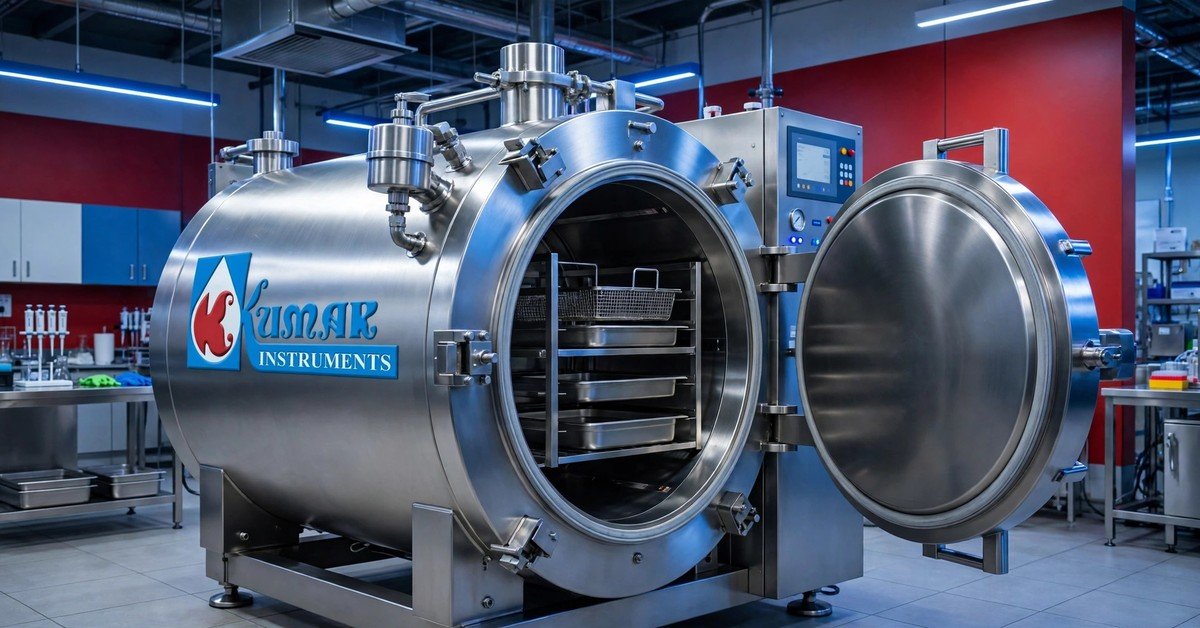
Walk into the sterile supply room of a busy Ludhiana hospital near the end of a morning shift and the scene is familiar. Trolleys of wrapped surgical packs, instrument trays from the theatres, and bins of linen wait their turn, while staff watch the clock because the afternoon theatre list depends on those loads coming back sterile. A Autoclave Horizontal is the machine that keeps this queue moving: a front-loading chamber built to take large, bulky loads and sterilize them with saturated steam in a single cycle.
The problem is not just volume, it is rhythm. Loads arrive in waves, and when one cycle runs long or a machine goes down, the backlog piles up fast. Theatres wait, linen waits, and in microbiology labs the backlog of culture media waits too. For any Ludhiana facility handling serious sterilization work, the choice of autoclave decides whether the day runs smoothly or becomes a constant firefight. That is why the horizontal configuration has become the standard wherever bulk loads are the daily reality.
What a Horizontal Autoclave Actually Does
Every autoclave does the same basic job. It exposes materials to saturated steam under pressure at high temperature, typically around the 121 degree mark for a standard cycle, long enough to destroy bacteria, spores, fungi, and viruses. The steam penetrates porous loads like wrapped packs and linen, and the combination of heat, pressure, and time is what makes sterilization reliable. The physics has been trusted for well over a century, even as the machines have grown far more sophisticated.
What changes from machine to machine is how the load goes in. A vertical autoclave opens at the top and you lower baskets into it, which suits flasks and bottles in a laboratory but is slow and awkward for large flat trays. A horizontal autoclave opens at the front with a wide door, and you slide trays or trolleys straight in on rails. That difference decides how fast a shift can load and unload, how much strain the staff take, and how evenly steam reaches every corner of a bulky load.
The horizontal chamber also suits what hospitals sterilize most. Surgical trays are flat and wide, linen packs are bulky, wrapped sets are rectangular. Sliding these horizontally into a cylindrical chamber uses the space efficiently and keeps the load organized so steam circulates properly. That circulation matters, because a pack pressed too tightly against its neighbor may not see enough steam contact, and a failed cycle only reveals itself when the indicator tape delivers the bad news.
Where the Bulk Loads Come From in Ludhiana
Ludhiana is known as an industrial city of cycles, auto parts, hosiery, and light engineering units. What outsiders often miss is the scale of its healthcare and research infrastructure: large hospitals, a constant stream of nursing homes and clinics, and a strong veterinary and agricultural research presence that draws work from across the region. Every one of these facilities generates sterilization work that never stops.
A multi-speciality hospital running several operation theatres can generate dozens of wrapped sets a day, plus gowns, drapes, and dressings. Nursing homes with one or two theatres have smaller but no less urgent needs, because they cannot hold a surgery waiting for a tray. Diagnostic and microbiology laboratories add another stream: petri dishes, culture media, and glassware that must be sterile before use and decontaminated after. This is where the bottleneck bites. A facility that handles hospital-scale loads with small tabletop units ends up running cycle after cycle from morning to night, with staff babysitting machines instead of doing productive work.
The horizontal machine exists for exactly this workload: fewer cycles, larger loads, faster turnaround per kilogram of material. When a Ludhiana buyer sits down to choose, the right starting question is not the machine’s price but how many cycles a week the facility will actually need. Answer that honestly and the sizing decision almost makes itself.
Why Orientation Matters More Than People Expect
First-time buyers sometimes assume any large autoclave will do and that orientation is a detail for the supplier. Anyone who has loaded a hundred surgical packs in a shift will say otherwise. Horizontal loading means rolling a trolley up, sliding trays in, closing one wide door, and starting the cycle, all at waist height, fast, and manageable for one person. Vertical loading means lifting baskets over the chamber rim and lowering them in, then lifting them out hot and steaming. It is slower, harder, and exhausting over a full shift.
There is also what happens inside during the cycle. Horizontal cylindrical chambers tend to give more uniform steam distribution across flat loads, because trays slide in level and packs sit flat, with fewer of the cold pockets that form when a load is piled high in a vertical basket. Better distribution means fewer re-runs, and every re-run avoided saves steam, water, electricity, and staff time. Over a year of daily operation that is a real operating cost difference.
The door deserves attention too. A good horizontal door locks under pressure with a positive seal, and gasket quality decides how long the machine holds performance between services. Ask how the door locks, how the gasket is replaced, and what prevents opening while pressurized. These are basic safety questions, but also practical ones: a door that is awkward to operate slows down every single cycle the machine will ever run.
Sizing, Steam, and Validation
Chamber size is where buyers most often go wrong, usually by buying too small. They run the machine twice as often as planned, wear it out early, and spend years regretting the saving. Size from actual load: trays, kilos of linen, wrapped sets per day at peak, plus margin for growth. A single-theatre nursing home may manage with a compact horizontal unit, while a multi-speciality hospital needs a larger chamber, possibly with trolley loading so the next load is prepared while a cycle runs.
Measure the room before ordering. A horizontal autoclave needs clearance in front for the door swing and trolley access, easy in a purpose-built sterile department, harder in a retrofitted room. Check the doorway, the corridor, and the final position, because a machine that cannot be wheeled into its room on delivery day is an expensive problem. Good suppliers ask for these measurements themselves.
An autoclave is only as good as its steam, and validation is how you prove the cycles work. Chemical indicators on each pack confirm exposure; biological indicators, run on a schedule, prove the process kills resistant spores. Keep cycle printouts or digital logs with your records, because auditors ask for them. Many horizontal autoclaves generate steam internally, which suits facilities without a boiler, but either way water quality matters: scale from hard water shortens the life of heating elements and valves, so a water treatment arrangement protects the investment.
Maintenance Habits That Keep It Running
Ludhiana’s engineering culture serves autoclave owners well, because these machines reward regular attention. Inspect the gasket on a schedule, not when it starts leaking. Keep the chamber drain clear so condensate does not pool. Test the safety valve as recommended. A hospital maintenance team with basic training can handle this routine work, and it prevents most of the small failures that cascade into big ones.
What should not be improvised is the periodic full service. Pressure vessels need a trained technician to check safety systems, calibrate temperature and pressure controls, and inspect the chamber. A calibrated machine holds its set points; a drifted one quietly runs cycles that are slightly off, and slightly off is how sterilization failures start. Keep service records alongside validation documents.
Spare parts availability is the other half of uptime. Gaskets, heating elements, door seals: these fail in normal use, and the difference between a one-day fix and a three-week wait is whether parts are stocked domestically and reach Punjab quickly. This is a genuine advantage of buying from an established Indian manufacturer. When the theatre list depends on the autoclave, downtime is measured in cancelled surgeries, not rupees.
Frequently Asked Questions
How is a horizontal autoclave different from a vertical one?
The chamber orientation and loading method differ. A horizontal autoclave has a front-opening door; you slide trays or trolleys in at waist height, which suits large flat loads like surgical packs and linen. A vertical autoclave opens at the top and you lower baskets in, which suits bottles and flasks. For bulk hospital loads, horizontal loading is faster, less tiring, and gives better steam distribution across wide trays.
What capacity should our facility choose?
Size from real load data: surgical trays, wrapped sets, and kilos of linen at peak daily throughput, plus margin for growth. A single-theatre nursing home can often manage with a compact horizontal unit, while a multi-theatre hospital needs a larger chamber, possibly with trolley loading. Measure doorways, corridors, and the installation room before ordering so the machine fits on delivery day.
Does it need an external steam supply?
Not necessarily. Many horizontal autoclaves generate steam internally, which suits facilities without a boiler. Others connect to an external steam line where available. Either way, water quality matters: hard water causes scale on heating elements and valves, so plan a water treatment arrangement to protect the machine and extend its service life.
How do we prove our cycles actually sterilized?
Use chemical indicators on packs every cycle, and run biological indicators on a schedule to prove the process kills resistant spores. Keep cycle printouts or digital logs as sterilization records for auditors. Calibrate the machine on a regular schedule so temperature and pressure readings stay accurate. Validation catches a drifting machine before it causes a failed cycle.
What maintenance does it need?
Routine care: inspect the door gasket, keep the chamber drain clear, test the safety valve as recommended. A trained technician should do periodic full service, checking safety systems, calibrating controls, and inspecting the chamber. Choose a supplier with domestic spares availability, because that decides whether a breakdown is a one-day fix or a three-week wait.
For facilities in Ludhiana handling hospital, laboratory, or veterinary sterilization loads, the Autoclave Horizontal from Kumar Instruments, 54/5911 Sadar Thana Rd, Basti Harphool Singh, Sadar Bazar, New Delhi 110006, phone +91 98994 63478, is built for exactly this kind of daily bulk workload. Share your load details and chamber requirements, and their team will help you size the machine so the sterilization queue never becomes a bottleneck again.