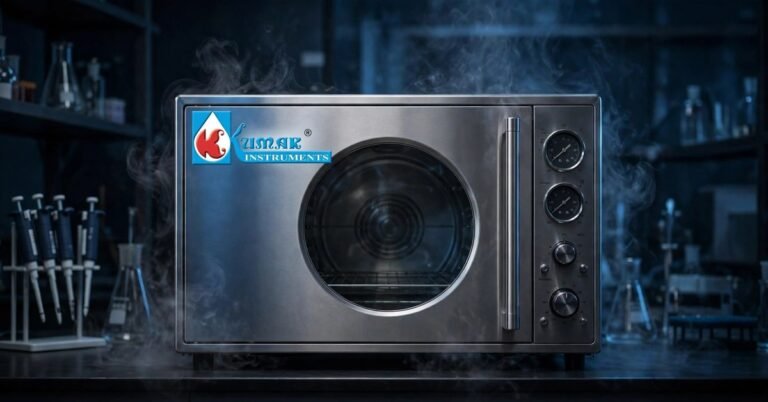

Autoclave Vertical in Rajkot: Full Sterilization Power in a Small Footprint
Autoclave Vertical in Rajkot: Full Sterilization Power in a Small Footprint
Floor space is the one thing a growing lab never has enough of. Between the testing benches, the sample storage, and the instruments that keep arriving, finding room for a full-size sterilizer feels impossible. That is exactly the problem an Autoclave Vertical solves. It delivers the same pressurised steam sterilization as its bulkier cousins, but in a top-loading vertical chamber that occupies a fraction of the floor area, a practical answer for the compact labs and workshops that fill Rajkot’s industrial landscape.
Rajkot’s economy runs on engineering goods, machine tools, casting, and small-scale manufacturing, and every one of these sectors has pockets where sterilization matters. Foundries test moulding sands and coatings in labs that need sterile media. Engineering units with in-house testing need sterilized glassware and samples. Small pharma and food testing setups around the city need reliable sterilization without dedicating a whole room to it. This article explains what a vertical autoclave does, how to choose one, and how to run it so every cycle actually sterilizes.
How Pressurised Steam Sterilization Actually Works
An autoclave sterilizes with saturated steam under pressure. At normal atmospheric pressure, steam tops out at 100 degrees, which is not enough to kill the toughest bacterial spores reliably. But raise the pressure inside a sealed chamber and the steam temperature climbs with it. At the standard sterilization condition, the chamber holds steam well above the boiling point, hot enough to destroy spores, bacteria, and fungi in a defined exposure time.
The vertical design arranges this chamber as a tall cylinder loaded from the top. You lift the lid, lower your baskets of media bottles, glassware, or instruments into the chamber, close and lock the lid, and start the cycle. The top-loading layout keeps the footprint small: the chamber grows upward instead of outward, so the unit tucks into a corner a horizontal front-loading sterilizer could never fit.
What matters for your results is not the shape but the cycle: heat-up, air removal, sterilization hold, and exhaust. Air trapped in the chamber is the enemy, because air pockets stay cooler than steam and shield whatever sits inside them. A proper cycle drives air out before the sterilization timer starts, holds temperature and pressure steadily through the exposure period, then exhausts safely. Understand these phases and you will understand most sterilization failures.
Choosing the Right Size and Features for Your Load
Size the chamber to your real load, not your imagined one. Count the media bottles, the glassware, and the instrument trays you sterilize on your busiest day, then make sure they fit with space for steam circulation. Cramming the chamber full defeats sterilization because steam cannot reach surfaces pressed tightly together. A slightly larger chamber run properly beats a maxed-out smaller one every time.
Look at the control system with a practical eye. A simple, robust controller that reliably runs the standard cycles is worth more than a complicated panel nobody fully understands. Useful features include a pressure gauge you can read at a glance, a safety valve that is easy to inspect, and a lid-locking mechanism that clearly shows when it is safe to open. In a busy small lab, equipment gets operated by whoever is free, so clarity beats sophistication.
Build quality decides the working life. The chamber, lid, and fittings live in a harsh environment of high-pressure steam, cycle after cycle. Stainless steel construction resists the corrosion that slowly eats lesser materials, and good gaskets and valves keep the unit sealing properly for years. Ask the supplier about spare parts availability before you buy. An autoclave that waits weeks for a gasket is not saving you any money.
Where Rajkot’s Workshops and Labs Need Sterilization
Casting and foundry units around Rajkot run testing labs that check moulding sands, binders, and coatings. Some of these tests need sterile sample containers and media to keep results clean. A vertical autoclave fits easily into a foundry lab corner and handles the daily sterilization load without demanding dedicated space or a special installation.
Engineering and machine tool units with quality labs face a similar situation. Their labs sterilize glassware, sample bottles, and occasionally culture media for environmental monitoring. The volumes are modest but the need is real, and a compact vertical unit matches this scale perfectly. It runs its cycles in the background while the lab gets on with testing.
Small-scale pharma, food, and water testing setups need sterilization they can defend in front of an auditor. Media preparation, glassware sterilization, and decontamination of waste all fall on the autoclave, and the records must show every cycle reached its conditions. A vertical autoclave with reliable controls and a readable gauge gives a small lab documented sterilization without the footprint or cost of a large horizontal unit.
Loading and Running Cycles That Truly Sterilize
Loading technique decides whether steam reaches everything. Place items so steam can circulate around them: bottles upright with caps loosened, instrument trays not stacked flat against each other, and nothing pressed hard against the chamber wall. Leave the centre of the load open rather than packing it solid. Steam is the sterilizing agent, and anywhere steam cannot reach is not sterilized.
Water level and air removal need attention every cycle. Fill to the marked level, not above and not below, because the water charge determines the steam supply. Let the unit vent air properly during heat-up before the sterilization timer begins. Operators who rush this stage get cycles that reach pressure on the gauge while air pockets inside the load stay cool, and the biological indicator tells the story later.
Respect the full cycle time, including exhaust and cooling. Opening the lid early is tempting when the lab is waiting on media, but it risks burns, disturbs the load, and can compromise the cycle. Plan sterilization into the day’s schedule so nobody is standing over the autoclave willing it to finish faster. A written cycle log, noting load contents, cycle parameters, and operator initials, keeps the process disciplined and auditable.
The Sterilization Mistakes That Cause Failed Cycles
The most common failure is overloading. When the chamber is packed tight, steam cannot penetrate the centre of the load, and items in the middle come out unsterilized while the gauge showed a perfect cycle. If your biological indicators keep failing despite correct settings, overloading is the first suspect. Run two proper cycles instead of one crammed one; the time cost is far less than a contamination incident.
The second failure is sealing problems. A worn lid gasket lets steam escape, the chamber struggles to hold pressure, and the cycle never quite reaches its conditions. Inspect the gasket regularly for cracks, flattening, or hardening, and replace it at the first sign of wear. Gaskets are inexpensive; failed sterilization is not.
The third failure is skipping validation. A new autoclave, a repaired one, or one that has moved to a new location should be checked with biological indicators in the hardest-to-sterilize positions of a full load before it goes into routine service. Repeat the check periodically. The indicator is the only honest witness to what happened inside the chamber, and labs that skip this step are running on faith.
Maintenance That Keeps a Vertical Autoclave Dependable
Daily habits matter most. Drain and wipe the chamber regularly to prevent scale buildup, especially if your water supply is hard. Scale insulates the heating surface, slows heat-up, and eventually affects performance. Use clean water for every cycle, and consider distilled or demineralised water if scaling is a persistent problem in your area.
Safety devices deserve scheduled attention, not just a glance when something seems wrong. Test the safety valve periodically according to the manufacturer’s guidance, check the pressure gauge against a reference, and make sure the lid-locking mechanism engages positively every time. These are the components that stand between normal operation and an accident, and they earn their inspection time.
Keep a small stock of consumables: gaskets, and any seals or fittings your model uses. When a gasket fails on a busy day, having the spare on the shelf is the difference between a ten-minute fix and a week of improvisation. Buy these from the same supplier who sold you the unit. Kumar Instruments has supplied laboratory equipment to Indian labs for over four decades, and that kind of continuity means the spares for your autoclave are still available years after the purchase.
Frequently Asked Questions
What is the difference between a vertical and a horizontal autoclave?
The difference is mainly in loading and footprint. A vertical autoclave loads from the top into a tall chamber and occupies much less floor space, which suits small labs. A horizontal autoclave loads from the front and usually offers a larger chamber for high-volume work. The sterilization principle, pressurised steam, is the same in both.
How full can I load the chamber?
Load it so steam can circulate freely around every item. As a practical rule, fill no more than about two-thirds of the chamber volume and never pack items tightly together. If you are unsure whether a load is too dense, run it as two cycles; underloading slightly is always safer than overloading.
Why did my biological indicator fail when the gauge showed correct pressure?
The gauge measures conditions at one point in the chamber, not inside your load. Trapped air pockets, overloaded chambers, or items packed too tightly can leave cold spots the gauge never sees. Review your loading technique and air removal stage, and revalidate with indicators placed in the centre of a full load.
How often should the gasket be replaced?
Inspect it before every cycle and replace it at the first sign of cracking, flattening, or hardening. With daily use, most gaskets last many months, but steam and heat age them steadily. Keeping a spare gasket on the shelf means a worn one never forces you to run a compromised cycle.
Can I sterilize liquids in a vertical autoclave?
Yes, with care. Loosen caps so pressure can equalise, use a slow exhaust to prevent boil-over, and let liquids cool in the chamber before handling. Never tighten caps before the cycle, and never rush the cooling stage with sealed liquid loads.
Sterilization is one of those lab functions nobody notices until it fails, and then it is the only thing anyone talks about. A vertical autoclave gives a space-pressed Rajkot lab full sterilization capability without demanding a dedicated room. If you are setting up or upgrading sterilization in your facility, talk to people who understand laboratory work before you buy. Contact Autoclave Vertical supplier Kumar Instruments, 54/5911 Sadar Thana Rd, Basti Harphool Singh, Sadar Bazar, New Delhi 110006, phone +91 98994 63478. Describe your load and your space, and they will help you choose the right unit.