
L.O.D Oven in Faridkot: Getting Moisture Analysis Right in QC Labs
L.O.D Oven in Faridkot: Getting Moisture Analysis Right in QC Labs
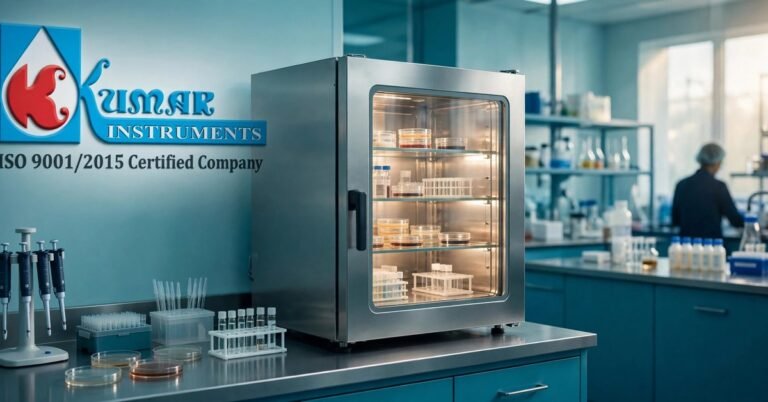
Moisture content is one of those quiet numbers that decides whether a batch passes or gets held back. For quality control labs in and around Faridkot, loss on drying testing is everyday work: checking raw materials before they enter production, verifying finished goods against their specifications, and keeping a clean record for audits. The instrument at the centre of all this is the L.O.D Oven, built to dry samples at a steady, controlled temperature so the weight loss you measure reflects the moisture in the material and nothing else.
This guide walks through what to check before you buy an L.O.D oven for a lab in Faridkot: temperature control, chamber size, build quality for Punjab’s climate, calibration support, and how labs here actually use these ovens day to day. Whether you are setting up a new QC room or replacing a unit that has served its time, the points below will help you spend on the right things.
What an L.O.D Oven Actually Does (and Why a Hot Air Oven Is Not Enough)
The loss on drying test is simple in concept. You weigh a sample, heat it at a specified temperature for a specified time, cool it in a desiccator, and weigh it again. The difference is taken as the moisture and volatile content. Pharmacopoeias describe this test for raw materials and finished products, and food and chemical labs use their own versions of it.
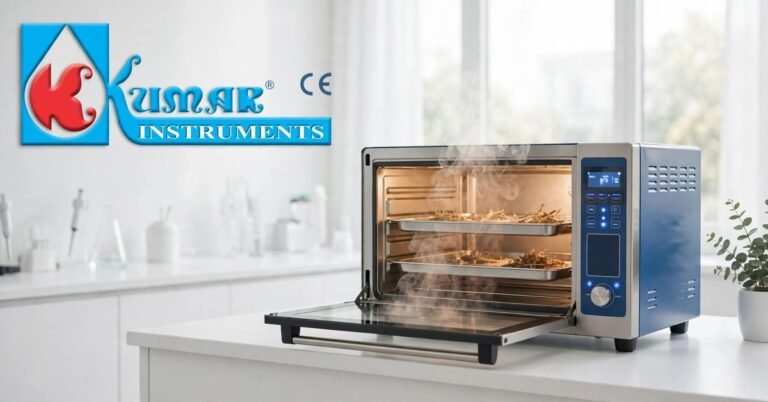
The test only works if drying conditions are truly the same for every sample, every time. That is what an L.O.D oven guarantees: it holds a set temperature with tight control, distributes heat evenly, and keeps air circulating so a sample on the top shelf dries under the same conditions as one on the bottom shelf. Most models include a digital temperature controller and a timer.
A regular hot air oven can dry things, but it is built for general drying and sterilising, not for measurement. Hot spots near the walls and a thermostat that drifts a few degrees are acceptable in a general oven and unacceptable when the result goes into a batch record. Buying the right instrument from the start is cheaper than repeating tests and answering audit questions later.
Temperature Control and Uniformity: The First Specification to Check
If you take one thing from this guide, let it be this: temperature uniformity matters more than maximum temperature. Every L.O.D oven reaches the temperatures this test needs; the real question is how evenly it holds them and how quickly it recovers after the door opens for loading.
When you compare an L.O.D Oven from different suppliers, look at the temperature controller first. A digital PID controller holds temperature far more steadily than a simple on-off thermostat, which lets the chamber swing above and below the set point. Ask the supplier to state the uniformity figure and how it was measured: uniformity in an empty chamber is a very different claim from uniformity with the chamber loaded and probes at the corners. A supplier who answers that question clearly is usually worth dealing with.
Pay attention to the sensor as well. A PT-100 sensor placed where it reads actual chamber conditions, rather than near the heating element, gives a truer picture of what your samples experience. A display with one-degree resolution is standard; what matters is honesty in the number, not extra decimal places. If a demonstration is possible, watch the display settle against your own calibrated thermometer. Ten minutes of observation tells you more than a page of specifications.
Chamber Size, Shelves, and Planning for Your Real Daily Load
Chamber size is where buyers most often go wrong, usually by buying too big. An oversized oven takes longer to stabilise, uses more power, and tempts operators to load unrelated work that disturbs airflow. A chamber that is too small becomes a daily bottleneck, with analysts queuing samples and rushing cycles to keep up.
The practical way to size the oven is to count your real daily load. How many samples does the lab run on a busy day, and how many dishes does each sample need? Remember that samples need space around them for air to circulate; cramming dishes edge to edge defeats the purpose of a uniform chamber. For most small and mid-sized QC labs in Faridkot, a medium chamber with two or three adjustable stainless steel shelves handles the routine comfortably, with headroom for the occasional rush.
Check the little things too. Removable shelves that slide out smoothly make loading and cleaning easier, and the inner chamber should be stainless steel, which resists corrosion and wipes clean. A viewing window in the door is genuinely useful, letting analysts confirm the chamber is at temperature without opening the door and spoiling the run. These small features decide whether the oven is a pleasure or a chore to work with every day.
Build Quality, Insulation, and Running an Oven Through a Punjab Summer
Faridkot summers are not gentle, and that affects an oven directly. When the lab itself sits at forty degrees or more, the instrument works harder to hold its set point, and poor insulation shows up as temperature drift and high power use. A double-walled chamber with proper insulation barely notices the weather outside; a thin-walled unit struggles exactly when your lab is busiest.
Look at the outer body as well. A powder-coated mild steel cabinet resists rust and cleans easily, which matters where the air carries dust and the occasional chemical vapour. The door gasket deserves a close look because it is the most common point of failure over the years: it should seal firmly all the way around. Ask whether replacement gaskets are readily available, because a five-minute part should never be the reason an oven sits idle for a month.
Placement matters too. Give the oven clearance on all sides for ventilation, keep it away from direct sunlight, and put it on a stable bench away from vibrating equipment. Where mains voltage fluctuates, a stabiliser protects the electronic controls.
Calibration, Documentation, and Service Support
An L.O.D oven that cannot be calibrated is a liability. Before finalising, ask for a calibration certificate with the instrument and confirm it can be verified against a calibrated reference thermometer across its working range. Pharma QC labs working under good manufacturing practices should also ask whether the manufacturer supports installation and operational qualification documentation; arranging it afterwards is always harder.
Then ask the questions buyers most often forget. How long is the warranty, and what does it cover? Are spare parts like heating elements, sensors, and gaskets stocked in India, and how quickly can they reach Punjab? Is there a service engineer who can visit Faridkot, or must the oven be shipped elsewhere for every repair? The answers determine the real cost of ownership far more than the figure on the quotation.
There is also a strong case for buying from an established Indian manufacturer rather than a trader selling an imported badge. Manufacturers who have built laboratory equipment for decades understand Indian laboratory conditions, keep spares for their own models, and answer the phone when something goes wrong. A lab in Faridkot cannot chase an overseas supplier for a replacement sensor; it needs a part on the next truck and an engineer who knows the instrument.
How Labs Around Faridkot Use L.O.D Ovens Day to Day
Faridkot’s laboratory landscape suits an L.O.D oven well. Pharmaceutical and chemical QC units in the wider Malwa region use it for incoming raw material checks and in-process moisture testing, where a result that is off by half a percent can hold up a batch. Food and grain testing labs, natural in a region that grows wheat, rice, and pulses, check moisture in grains and flours, since it directly affects shelf life.
Dairy and animal feed labs in the area run loss on drying on milk powder, feed ingredients, and premixes. Medical and university laboratories in Faridkot use these ovens for student practicals and research. Water and effluent labs use them when determining total solids. It is a genuinely multi-industry instrument, which is why you will find one in almost every serious QC room near the city.
What these labs share is a need for results they can defend. When an auditor asks why a batch was released, the moisture figure has to trace back to an instrument that was calibrated and a chamber that held its temperature. The labs around Faridkot with the smoothest audits are rarely the ones with the fanciest equipment; they are the ones whose everyday instruments do exactly what they claim to do.
Frequently Asked Questions
At what temperature is a loss on drying test usually run?
It depends on the method. Many materials are tested at 105 degrees Celsius for a specified time, but some call for different temperatures or drying to constant weight. Always follow your specification or pharmacopoeial method.
How long does an L.O.D test take?
A typical test runs for a few hours, including cooling the sample in a desiccator before the final weighing. Some methods require drying to constant weight, meaning you repeat the dry-weigh cycle until two successive weighings agree. Load samples early enough that results are ready when production needs them.
Can a regular hot air oven be used for L.O.D testing?
For rough, non-critical drying, yes, but not for results that go into batch records or face audits. A general hot air oven is not built for the uniformity and control that loss on drying demands, and uneven heating shows up as variation between analysts and between runs.
How often should an L.O.D oven be calibrated?
Annual calibration against a certified reference is the usual baseline, with periodic verification in between. Keep a logbook of every check: date, reference used, observed readings, and the operator’s initials. Auditors look for this record, and it helps you spot drift early.
What chamber size suits a small QC lab?
For a small lab running a few dozen samples a day, a medium chamber with two or three adjustable shelves is usually the sweet spot. Count your busiest day’s load, allow space between samples for air circulation, and leave a little headroom for growth.
Labs in Faridkot looking for a dependable L.O.D Oven backed by decades of manufacturing experience can reach out to Kumar Instruments, 54/5911 Sadar Thana Rd, Basti Harphool Singh, Sadar Bazar, New Delhi 110006, phone +91 98994 63478. The team understands what a working QC lab actually needs from its drying equipment and can help you match the right chamber size, controller, and documentation package to your lab’s real workload, so you buy once and buy right.