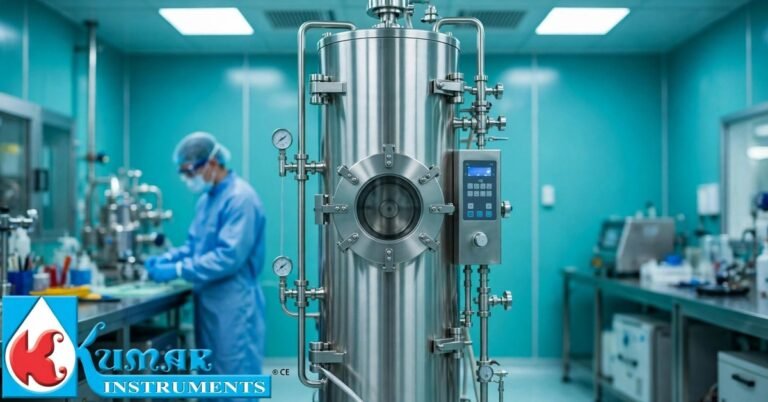

Stability Chamber in Mohali: What Pharma QC Teams Should Know Before Buying
Stability Chamber in Mohali: What Pharma QC Teams Should Know Before Buying
In pharmaceutical manufacturing, the question that decides a product’s shelf life is asked inside a single machine: how does this formulation behave over months at defined temperature and humidity? The accelerated and long-term stability studies that answer it run inside a Stability Chamber, and the data it produces goes directly into regulatory filings. When a chamber drifts, it is not just an equipment problem. It is a data integrity problem.
Mohali’s pharma belt, stretching through the Derabassi corridor, houses formulation units, QC laboratories, and R and D centers where stability studies run continuously. For QC teams here, the stability chamber is among the most audited pieces of equipment in the building. Yet purchase decisions sometimes focus on chamber volume and price while giving less attention to the control precision, uniformity, and documentation features that auditors actually examine. This guide covers what matters before you buy.
What Stability Studies Demand from the Chamber
Stability protocols define precise storage conditions: temperature and relative humidity held constant for months or years. Long-term studies, intermediate conditions, accelerated studies at elevated temperature and humidity. Each condition is a regulatory commitment, and the chamber must hold it without meaningful deviation for the entire study duration.
That duration is what makes stability chambers different from ordinary environmental chambers. A deviation lasting hours can invalidate months of study data. The chamber is not just creating conditions; it is safeguarding an investment of time, samples, and analytical work that cannot be redone quickly. Every specification you evaluate should be read through that lens: what happens to my study if this parameter drifts?
For QC teams in Mohali preparing filings, the chamber’s performance becomes part of the submission’s credibility. Regulators expect evidence that storage conditions were maintained, which means the chamber must not only perform but prove it performed, continuously, for the whole study.
Temperature and Humidity Control: Precision Over Range
Buyers often fixate on the chamber’s operating range, but stability work uses a handful of specific conditions. What matters is control precision at those conditions: how tightly temperature and humidity hold their setpoints, and how quickly the chamber recovers after door openings.
Look for independent, high-quality control of temperature and humidity, with sensors positioned to reflect conditions at the sample locations, not just near the chamber walls. Ask the supplier for control stability figures (variation over time at setpoint) and uniformity figures (variation across the chamber) at the specific conditions you will use. Generic range-wide specifications are less useful than tight figures at your actual study conditions.
Humidity control deserves particular scrutiny. Maintaining relative humidity precisely requires a well-designed humidification and dehumidification system, plus a reliable water supply. Ask how humidity is generated, what water quality is required, and what happens to humidity control if the water supply is interrupted. In Mohali’s climate, where ambient humidity swings seasonally, the chamber’s ability to both add and remove moisture reliably is tested year-round.
Uniformity and Mapping: Trust, Then Verify
A stability chamber’s display shows one temperature and one humidity. Your samples experience the conditions at their shelf positions, which may differ. That difference, if uncharacterized, is an unknown error in every study the chamber runs.
This is why chamber mapping (temperature and humidity mapping with multiple calibrated sensors throughout the loaded chamber) is standard practice before a chamber enters GMP service. The mapping reveals hot spots, cold spots, and humidity gradients, and it defines which shelf positions are qualified for study samples.
When buying, ask the supplier whether mapping support or guidance is provided, and whether the chamber design minimizes gradients by construction (good air circulation, sensible shelf layout, sensor placement that reflects sample conditions). A chamber that maps cleanly saves weeks of qualification effort. One with severe gradients may never qualify properly, regardless of what the display claims.
Data Logging, Alarms, and 21 CFR Part 11 Considerations
In regulated pharma work, the chamber must document its own performance. Continuous data logging of temperature and humidity, with records that cannot be altered undetected, is the baseline expectation. Ask exactly what the chamber records, how often, where the data is stored, and how it is retrieved for review and audits.
Alarms are the second half of the system. The chamber should monitor its conditions continuously and alert (visibly, audibly, and ideally remotely) when temperature or humidity leave their specified bands. Ask what triggers an alarm, how operators are notified, and whether alarm events are logged with timestamps. A chamber that drifts silently overnight and only reveals it in the morning log has failed its most basic duty.
If your site works under data integrity expectations aligned with 21 CFR Part 11, confirm the chamber’s software supports the relevant controls: unique user logins, audit trails of setting changes, and protected records. Not every stability chamber on the market meets these expectations, and discovering the gap during an audit is the wrong time. Raise it during purchase.
Build Quality for Years of Continuous Operation
Stability chambers run for years without pause. The compressor, humidification system, sensors, and door seals all work continuously, and the build quality decides whether that means a decade of quiet service or a cycle of breakdowns.
Examine the refrigeration system: it should be sized with margin for the chamber’s duty, not running at its limit continuously. Check the humidification approach and its maintenance demands. Look at door construction and gasket quality, because the door is opened regularly for sample management and every opening stresses the seal. Interior materials should be corrosion-resistant stainless steel, easy to clean, and unaffected by years of humidity exposure.
Ask about the expected service life of major components and their replacement procedures. A chamber where the humidity sensor or a controller board can be replaced in an hour is a different ownership proposition from one needing factory service for routine parts. And confirm spare parts availability for the long term: stability chambers serve for a decade or more, and the supplier should commit to supporting that horizon.
Mohali Realities: Pharma Belt Expectations and Service
Buying a stability chamber in Mohali means buying into the expectations of a mature pharma cluster. QC teams here work under regular regulatory scrutiny, which raises the bar on documentation, qualification support, and data integrity features. A chamber adequate for a non-regulated lab may fall short here, so specify to your actual regulatory environment, not to a generic standard.
The concentration of pharma units is also an advantage: suppliers serving this belt understand the requirements and typically offer better local support. Use that. Ask for reference installations in nearby pharma QC labs, and talk to their users about real-world performance, service responsiveness, and audit experiences. There is no better due diligence than a candid conversation with someone running the same chamber.
Utilities and environment round out the local picture. Stability chambers need stable power, suitable water for humidification, and adequate ventilation for heat rejection. Confirm each against your facility before ordering. And consider redundancy for critical studies: some labs run backup chambers or split studies across two units so that a single equipment failure cannot wipe out an entire stability program.
What conditions do stability chambers maintain?
Stability chambers maintain defined temperature and relative humidity conditions for pharmaceutical stability studies, including long-term, intermediate, and accelerated storage conditions per regulatory guidelines. The exact setpoints follow your study protocol. What matters is not the range the chamber offers but how precisely it holds your specific conditions.
How is a stability chamber different from a regular incubator?
A stability chamber controls both temperature and humidity precisely over months-long studies, with continuous data logging, alarms, and qualification documentation. A standard incubator controls temperature only, for shorter durations, without the documentation rigor. They serve entirely different purposes and are not interchangeable in regulated work.
What is chamber mapping and why does it matter?
Mapping measures temperature and humidity at multiple points throughout the loaded chamber using calibrated sensors, revealing how conditions vary by position. It identifies qualified shelf positions for study samples and is a standard part of bringing a chamber into GMP service. A chamber that maps poorly may never be suitable for regulated studies.
How do I handle a temperature excursion during a study?
Follow your site’s deviation procedure: document the excursion (duration, magnitude, affected conditions) from the chamber’s logs, assess impact on the study per your SOPs, and record the investigation outcome. This is exactly why continuous logging and alarming matter: without records, you cannot assess impact, and without assessment, the study data is compromised.
What should I check during supplier evaluation?
Control precision and uniformity at your study conditions, humidity system design and water requirements, data logging and alarm capabilities, data integrity features, build quality for continuous duty, spare parts and service support in your region, qualification and mapping support, and reference installations in pharma QC labs. The supplier’s comfort with these questions indicates their experience with regulated customers.
A precise, well-documented Stability Chamber protects the most valuable asset in pharma QC: trustworthy study data. For pharmaceutical QC and R and D teams in Mohali and across Punjab, Kumar Instruments manufactures stability chambers engineered for the control and documentation that regulated work demands. Discuss your requirements with us at Kumar Instruments, 54/5911 Sadar Thana Rd, Basti Harphool Singh, Sadar Bazar, New Delhi 110006, phone +91 98994 63478, and we will help you configure the right chamber for your stability program.