Muffle Furnace in Vadodara: Getting Accurate Ashing Results in Chemical Testing
Muffle Furnace in Vadodara: Getting Accurate Ashing Results in Chemical Testing
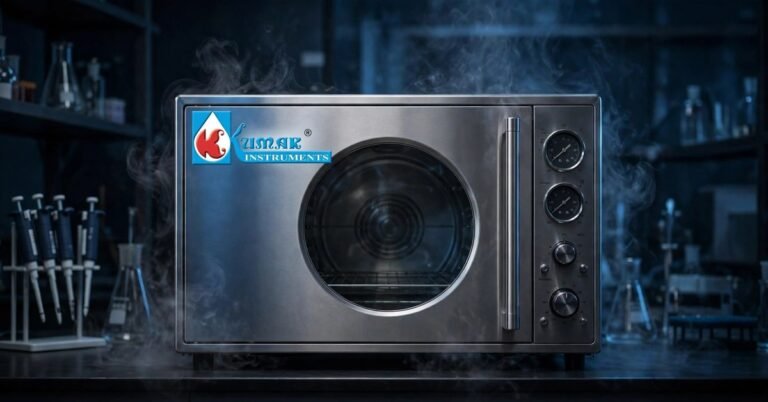
Ashing looks like the simplest test in the lab. You weigh a sample, burn off everything combustible, and weigh what is left. But anyone who has run this test in a chemical lab around Vadodara knows the result is only as good as the furnace behind it. A Muffle Furnace gives you a clean, controllable high-temperature chamber where the sample never touches the heating elements or the flame, so the ash you weigh at the end is truly the inorganic residue of your material and nothing else.
Vadodara sits in the middle of a petrochemical and chemical belt, with large industrial estates full of plants that live on analytical accuracy. Ash content decides whether a polymer batch meets specification, whether a catalyst support is clean enough for reuse, and whether a raw material shipment is worth accepting. When the ashing result drifts, production decisions drift with it. This article explains how to get accurate, repeatable ashing results from your muffle furnace, the way a seasoned lab hand would explain it.
What a Muffle Furnace Does That an Open Flame Cannot
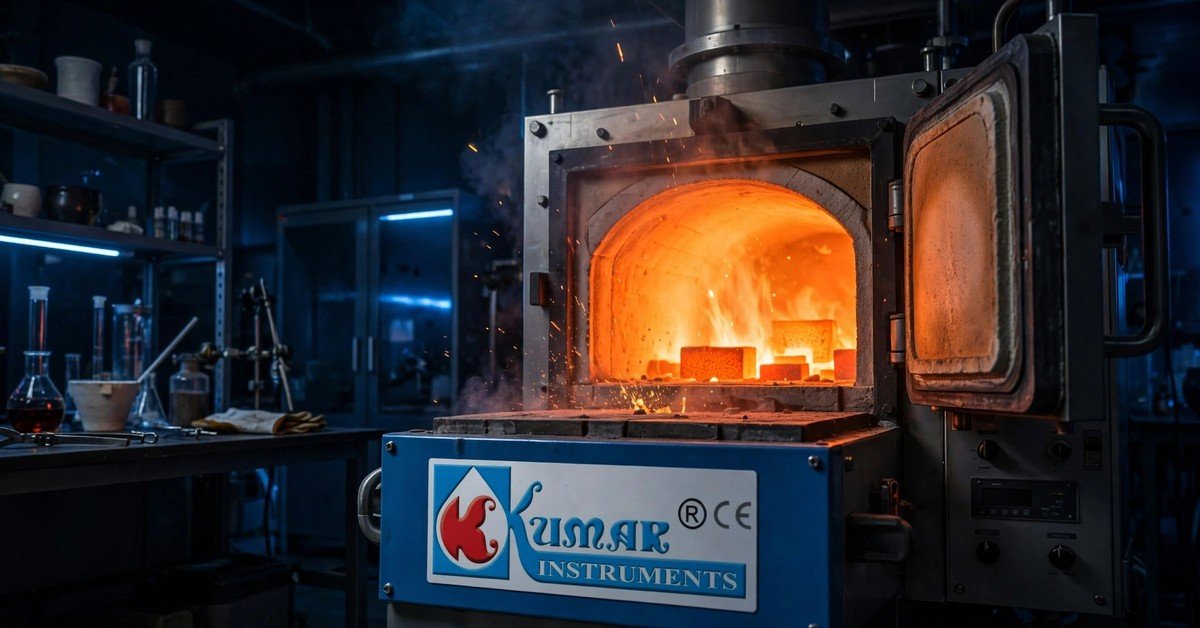
The “muffle” in the name is the key. It is an inner chamber, usually ceramic, that separates your sample from the heating elements surrounding it. Heat reaches the sample by radiation from the hot muffle walls, not by direct contact with a flame or an element. That separation matters because direct flame contact can contaminate the ash, cause uneven burning, and make the result impossible to repeat from one run to the next.
Temperature control is the second difference. A muffle furnace holds a set temperature, often up to 1000 degrees or more, with reasonable uniformity across the chamber. Ashing protocols usually specify an exact temperature because different materials need different treatment: too cool and the carbon never fully burns off; too hot and you start volatilising the very minerals you are trying to measure. A controlled furnace lets you hit the specified temperature and stay there for the full ashing time.
The third difference is cleanliness of the environment. Combustion gases vent out while the chamber stays free of the soot and contaminants an open burner produces. For trace-level ash determinations, where you are measuring fractions of a percent, that clean environment is the difference between a meaningful number and noise. Vadodara’s chemical labs, which routinely work at these levels, depend on it.
Preparing Samples the Way Accurate Results Demand
Accurate ashing starts before the furnace is even switched on. The crucible must be clean, dry, and pre-ignited to constant weight. “Constant weight” means you heat the empty crucible, cool it in a desiccator, weigh it, and repeat until two consecutive weighings agree. Skip this step and the weight changes of the crucible itself get mixed into your ash result.
Sample size needs judgement. Too large a sample and the material chars into a crust that traps unburned carbon underneath; too small and the weighing error becomes a large fraction of the result. For most materials, one to two grams in a standard crucible works well. Spread the sample in a thin, even layer rather than heaping it in the centre, so air reaches all of it during the initial charring.
Charring deserves patience. Many protocols call for gently charring the sample over a low flame or at a low furnace temperature before the full ashing temperature. This drives off volatiles slowly instead of letting the sample ignite and spit material out of the crucible. A sample that flames up and spatters has lost mass that was never ash, and no calculation can recover it. Slow charring is boring to watch and essential to do.
Temperature, Time, and the Mistakes That Skew Ash Values
The most common error in ashing is impatience with temperature. Ramping straight to the final temperature shocks the sample: volatiles erupt, material spatters, and the result comes out low. A stepped ramp, holding briefly at a lower temperature to char the sample before going to full ashing temperature, gives cleaner and more repeatable results. Write the ramp into your SOP so every operator does it the same way.
The opposite error is under-ashing. If the residue still shows black specks of carbon, the job is not done. Return the crucible to the furnace for another cycle rather than accepting a grey result. Some materials, especially certain polymers and carbon-filled compounds common in Vadodara’s chemical plants, need longer ashing times or a slightly higher temperature to burn clean. Know your material’s behaviour and plan the time accordingly.
Cooling is the quiet troublemaker. A hot crucible pulled from the furnace starts absorbing moisture from the air immediately, and ash is often hygroscopic. Always cool crucibles in a desiccator with fresh desiccant, and weigh promptly once they reach room temperature. Labs that leave crucibles sitting on the bench “for a few minutes” while they finish something else are measuring water, not ash. The desiccator is not optional equipment.
What Vadodara’s Chemical Labs Actually Ash
Polymer and plastics units in Vadodara’s industrial estates run ash tests constantly. Fillers like calcium carbonate, glass fibre, and talc are added to polymers in precise proportions, and the ash test verifies the filler loading of each batch. If the ash value drifts, either the formulation changed or the mixing was uneven, and both are problems production needs to know about immediately.
Petrochemical labs ash catalyst samples, spent adsorbents, and process residues to check for metal content and inorganic contamination. These tests often feed into decisions about catalyst regeneration or disposal, which carry real cost. An accurate ash value here is not academic; it decides whether an expensive catalyst gets another cycle or goes to waste.
Raw material QC is the third big application. Incoming shipments of chemicals, minerals, and additives get ash-tested against the supplier’s certificate of analysis. When your lab’s number disagrees with the supplier’s, you need total confidence in your own method before you reject a shipment or accept a substandard one. A well-run muffle furnace procedure gives you that confidence.
Keeping the Furnace Honest: Calibration and Care
Furnace controllers drift, and thermocouples age. A display that reads 550 degrees while the chamber actually sits at 520 will under-ash every sample you run, and you will never see it in the numbers until a customer complains. Verify the chamber temperature with a calibrated reference thermocouple or temperature indicator at least once a year, at the temperatures you actually use. Keep the records with your calibration files.
Chamber condition affects results more than most operators realise. Cracks in the muffle, spalled ceramic, or heavy scale buildup change the heat distribution and can contaminate samples with debris. Inspect the chamber interior regularly, brush out loose material, and address damage promptly. A furnace with a failing muffle does not just give poor uniformity; it can shed particles into your crucibles.
Door seals and hinges wear with daily use at high temperature. A door that no longer closes squarely leaks heat, the controller works harder, and the chamber develops hot and cold spots. If you notice longer heat-up times or uneven results between crucibles placed in different positions, check the door alignment and seal before blaming the method. Small mechanical issues cause a surprising share of “method problems.”
Choosing a Muffle Furnace Your Lab Can Rely On
When you evaluate a furnace, look past the brochure and at the practical details. Chamber size should fit your real workload: the number of crucibles you ash in a typical run, with space around each for heat circulation. A chamber crammed full of crucibles ashes unevenly, so buy for your busiest day with room to spare, not for your quietest.
Ask about temperature uniformity, not just maximum temperature. Every furnace reaches its top rating; the better question is how evenly it holds your working temperature across the chamber. Uniformity is what makes the crucible at the back give the same result as the one at the front. Also check the controller: a programmable controller with ramp and hold steps makes stepped ashing profiles repeatable instead of operator-dependent.
Finally, consider who will support the furnace over its working life. Heating elements are consumables and will need replacement eventually. Thermocouples age. A supplier who stocks spares and understands furnace service keeps your lab running instead of waiting on parts. Kumar Instruments has supplied laboratory equipment to Indian labs for over four decades, and that kind of long-term backing is exactly what a workhorse instrument like a muffle furnace needs.
Frequently Asked Questions
What temperature should I use for ashing?
Follow your material’s specification or standard method, since different materials ash at different temperatures. Many general ashing procedures use 550 to 600 degrees, but some materials need higher temperatures to burn off carbon fully, while others lose volatile minerals if overheated. Never guess; check the method.
Why does my ash still have black specks in it?
Black specks mean unburned carbon, so the ashing is incomplete. Return the crucible to the furnace for another cycle at the specified temperature. If it keeps happening, your sample may need a longer ashing time, a stepped temperature ramp, or thinner sample layers to let air reach the material.
How do I know my furnace temperature is accurate?
Verify it with a calibrated reference thermocouple or temperature indicator placed in the chamber, at the temperatures you actually use. Do this at least once a year and keep the records. Controller displays drift over time, so the display alone is not proof.
Why do my ash results vary between crucible positions?
Uneven chamber temperature is the usual cause. Check the door seal and alignment, inspect the muffle for damage, and avoid overcrowding the chamber. If the variation persists, get the temperature uniformity mapped to see where the hot and cold spots are.
Can I open the furnace door during ashing to check the sample?
Avoid it. Opening the door drops the chamber temperature sharply and lets in a rush of air that can disturb the sample. The temperature then takes time to recover, which extends the ashing cycle and hurts repeatability. Plan the time and temperature in advance, and let the cycle run.
Ashing is a simple test that punishes sloppy technique, and the furnace is the foundation everything else rests on. If your Vadodara lab depends on ash values for batch release, catalyst decisions, or supplier disputes, make sure the instrument deserves that trust. For help selecting a furnace matched to your workload and your methods, contact Muffle Furnace supplier Kumar Instruments, 54/5911 Sadar Thana Rd, Basti Harphool Singh, Sadar Bazar, New Delhi 110006, phone +91 98994 63478. Describe what you ash and how often, and they will point you to the right unit.