Melting Point Apparatus in Navsari: A Buyer’s Guide for Pharma and Textile QC Labs
Melting Point Apparatus in Navsari: A Buyer’s Guide for Pharma and Textile QC Labs
Walk into any quality control lab in Navsari and you will find one instrument sitting quietly on a bench that decides the fate of entire batches. A melting point apparatus does not look dramatic, but it answers one of the most fundamental questions in chemistry: is this material what it claims to be, and is it pure? From pharmaceutical raw materials to the specialty chemicals used in textile processing, melting point testing remains the fastest first check a lab can run. For labs in Navsari, a city sitting between Surat’s textile belt and the pharmaceutical manufacturing zones of South Gujarat, choosing the right model is a practical decision that affects daily workflow, audit readiness, and long-term reliability.
This guide walks through what a melting point apparatus actually does, which types are available in the Indian market, what features matter for Navsari’s mix of industries, and how to avoid paying for specifications your lab will never use.
What a Melting Point Apparatus Does and Why It Matters
The principle is simple. A pure crystalline compound melts within a narrow temperature range, usually one or two degrees. Impurities widen and lower that range. So when a QC chemist heats a small sample in a capillary tube and notes the first droplet and the moment the sample goes fully clear, those two temperatures tell a story about identity and purity.
In Navsari, this test shows up in more places than most people realise. Pharmaceutical units use it to verify incoming raw materials before they touch a production line. Textile chemical suppliers check melting ranges of dyes and auxiliaries to confirm they received the right grade. Colleges use it as a teaching staple for organic chemistry practicals. It is an instrument that gets used every single day, which is exactly why the buying decision deserves care.
Melting point testing is not outdated because of spectroscopy either. Infrared and NMR confirm structure, but a widened melting range still catches small contamination levels that other methods miss. Pharmacopoeias continue to reference melting point determination, and many in-house QC protocols in Indian pharma plants list it as a mandatory incoming material check. An instrument costing a fraction of a spectrophotometer earns its place by catching problems early.
Types of Melting Point Apparatus Available in the Market
There are three broad categories, and understanding the differences will save you from either underbuying or overspending.
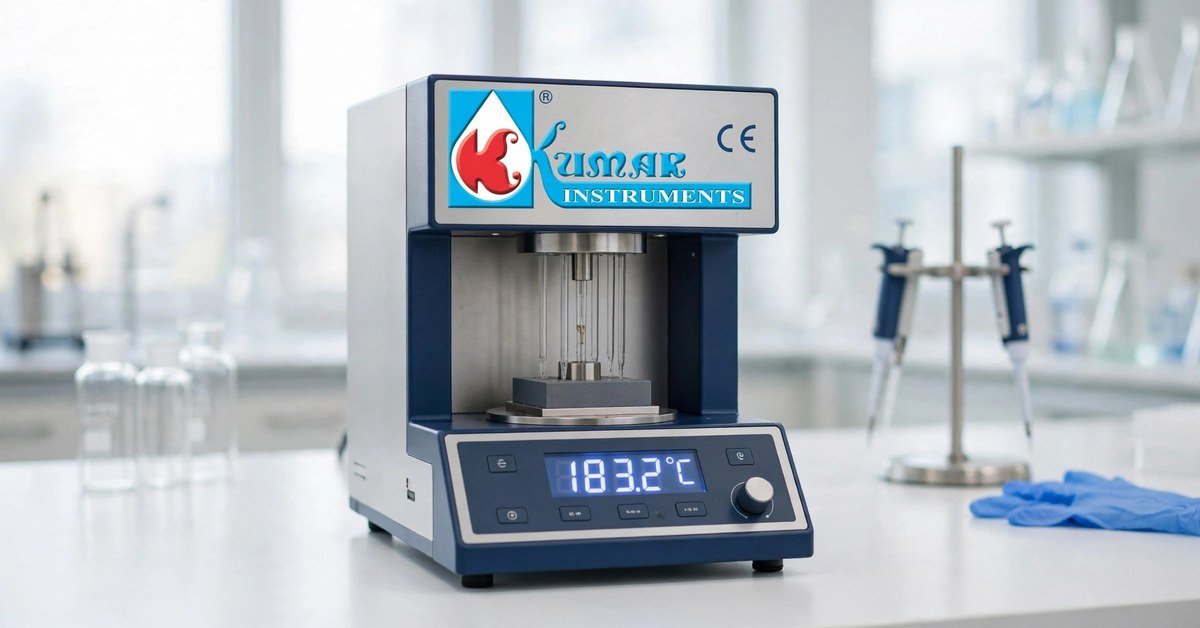
The basic electrically heated block type is the workhorse of most Indian labs. It has a metal heating block with capillary slots, a thermometer or digital sensor, and a viewing window, and the operator records temperatures manually. These units are affordable, simple to maintain, and perfectly adequate for routine QC work where a trained chemist is doing the testing.
The second category is the digital melting point apparatus with a digital temperature display and programmable heating rates. Many models let you set a slow heating rate near the expected melting point for accuracy. These suit labs that want better documentation and less dependence on the operator’s reaction time.
The third category is the fully automatic type, where the instrument detects the melt optically and reports the temperatures itself. These are the most expensive and suit only larger pharma QC departments running dozens of samples a day. For a small or mid-sized lab in Navsari, an automatic unit is usually more machine than the workload justifies.
For most buyers in this region, the sweet spot is a reliable digital model. It gives the accuracy modern QC demands without the price tag of full automation. If your lab runs melting point tests only a few times a week for teaching or occasional checks, even a well-built basic model from a reputed Indian manufacturer will serve you for years.
Key Features to Check Before You Buy
Temperature range and accuracy come first. Most organic compounds melt well below 300 degrees Celsius, so a unit reaching 300 or 350 degrees covers nearly all routine work. Accuracy matters more than range for QC: a stated accuracy of plus-minus one degree at 200 degrees is a good benchmark for routine pharmaceutical testing.
Heating rate control is the feature that separates usable instruments from frustrating ones. Melting point determination needs a slow approach, typically one to two degrees per minute near the expected melting point. If the block heats too fast, you overshoot and record a high reading. Look for models with adjustable heating rates or at least a fine control knob, because this directly affects how repeatable your results are between operators.
Sample capacity is straightforward: most units handle two or three capillary tubes at once, which lets you compare a test sample against a reference standard in the same run. The viewing arrangement deserves attention too. A clear, well-lit window with magnification makes the melt transition much easier to judge. If possible, ask the supplier for a demonstration before buying, because photographs in a catalogue do not tell you how comfortable the viewing actually is.
Calibration and documentation support matter for regulated labs. Pharma units around Navsari that follow good manufacturing practices need instruments that can be calibrated against certified reference standards, with calibration certificates and user manuals from the supplier. Ask upfront whether the manufacturer supports installation qualification documentation, because arranging it afterwards is always harder.
How Navsari Labs Typically Use It
Navsari’s industrial character shapes what labs here actually need. The city sits in a corridor of textile processing and is within easy reach of pharmaceutical manufacturing clusters in Ankleshwar, Bharuch, and Surat. A typical day in a Navsari QC lab might involve testing incoming batches of a pharmaceutical intermediate, checking a consignment of a textile auxiliary, and running student practicals if the lab belongs to a college. The instrument has to switch between these jobs without fuss, which is why ruggedness matters: labs in this region run in warm, humid conditions, and equipment that tolerates the environment without constant service calls is valued.
Local buyers also prefer manufacturers who respond quickly on service. When a heating element fails or a sensor drifts, a lab cannot wait weeks for a service engineer. Working with an established Indian manufacturer is a practical advantage, and it is one reason labs in South Gujarat often choose domestic makes over imported units that sit idle when something goes wrong.
Maintenance Tips That Keep It Accurate for Years
The heating block is the heart of the instrument. Keep capillary slots clean, because residue from melted samples seeps into the block and causes uneven heating and strange readings. A thin cleaning tool or a soft brush after the block cools is enough. Never poke at the block with metal tools while it is hot.
Calibrate routinely, not as an afterthought. Use certified reference standards to check the unit at least once a quarter, or monthly if the lab is under regulatory audit. Keep a simple logbook with the date, standard used, observed value, and operator initials. Auditors in pharma QC specifically look for this record, and it helps you spot sensor drift before it corrupts results.
Capillary tubes are consumables, and quality varies. Use clean, dry, thin-walled tubes and fill them to a consistent height, about two to three millimetres of packed sample. Inconsistent filling is one of the most common causes of erratic readings, and it is an operator training issue rather than an instrument fault. Keep a stock of tubes on hand so nobody is tempted to reuse them.
Electrical care is basic but often ignored. The unit draws significant current when heating, so plug it into a properly rated socket and avoid long extension cords. In areas with voltage fluctuation, a stabiliser protects the heating element and the electronics. Dust the ventilation openings periodically, because overheating shortens the life of internal components. Finally, train every new operator on the same procedure: a one-page standard operating procedure pinned near the instrument keeps results consistent and makes audit time uneventful.
Balancing Budget Against Long-Term Value
Price ranges in the Indian market vary widely, and the cheapest option is rarely the cheapest over five years. A basic unit from an unknown supplier might save money on day one, but if the sensor drifts within a year and spares are unavailable, the lab ends up buying twice.
When comparing quotes from suppliers serving Navsari, ask what is included: calibration certificate, spare capillary tubes, user manual, warranty period, and service terms. A slightly higher price with a proper warranty and accessible service is usually the better deal for a working lab.
For labs in Navsari, buying from an established Indian manufacturer also simplifies the paperwork. Invoices, GST documentation, and service contracts are straightforward, and spare parts like heating elements and sensors are typically available without long lead times.
Frequently Asked Questions
What temperature range does a lab in Navsari usually need?
For most routine work with pharmaceutical intermediates, dyes, and organic compounds, a range up to 300 degrees Celsius is sufficient. Focus more on accuracy and heating rate control than on chasing a higher maximum temperature you will rarely use.
Can one instrument handle both pharma QC and teaching use?
Yes. A good digital model works fine for both. The difference is documentation: pharma QC needs calibration records and operating procedures, while teaching labs need durability and simplicity. Choose a model that satisfies the stricter requirement, which is usually the pharma side.
How often should the apparatus be calibrated?
Quarterly calibration against certified reference standards is a sensible baseline. Labs under regulatory audit often calibrate monthly. Keep a logbook of every check, because auditors will ask for it and the record helps you catch sensor drift early.
What is the most common cause of inconsistent readings?
Usually technique, not the instrument: heating too fast near the melting point, or packing capillary tubes to different heights. Train operators to heat at one to two degrees per minute near the expected value and to fill tubes consistently. That single habit fixes most repeatability problems.
Should a small lab buy an automatic model?
Usually not. Automatic detection pays off when a lab runs dozens of samples daily and needs hands-free records. For a small lab testing a few samples a day, a digital model with manual observation gives the same accuracy at a much lower price.
Labs in Navsari looking for a dependable melting point apparatus backed by decades of manufacturing experience can talk to Kumar Instruments, 54/5911 Sadar Thana Rd, Basti Harphool Singh, Sadar Bazar, New Delhi 110006, phone +91 98994 63478. Manufacturing laboratory equipment With decades of manufacturing experience, the company supplies QC labs across India with instruments built for daily bench work, and the team can help you match the right model to your lab’s actual workload.